A furnace that suddenly stops producing heat can quickly make your home uncomfortable, especially during the cold winter months in Ontario. Whether your heating system is blowing cold air, running continuously or refusing to turn on, the problem can have several causes. Sometimes, a simple issue such as an incorrect thermostat setting or a clogged air filter is responsible. In other situations, the system may have an electrical, mechanical or ignition problem that requires professional attention.
At Comfort Living HVAC, we understand how important a dependable heating system is for your family’s comfort. Before arranging a repair, there are several basic checks you can safely perform to identify potential problems. In this guide, we explain 10 things to check when your furnace is not heating, discuss common warning signs and help you understand when professional assistance is necessary.
1. Check Your Thermostat Settings
Your thermostat controls when your furnace starts, stops and supplies warm air throughout your home. If the settings are incorrect, your heating system may not receive the signal to operate. Before assuming there is a major equipment problem, check that the thermostat is set to HEAT rather than COOL or OFF. Also, make sure the selected temperature is higher than the current indoor temperature.
What to Look For
Check the following thermostat settings before investigating other components:
Heating mode: Make sure the thermostat is set to HEAT. An incorrect setting can prevent the furnace from starting its heating cycle.
Temperature selection: Set the desired temperature above the current room temperature so the system receives a heating demand.
Fan setting: Select AUTO instead of ON if you want the blower to operate only during heating cycles.
Display and batteries: A blank screen may indicate dead batteries or an electrical issue that needs attention.
If adjusting the settings does not solve the problem, the thermostat or its wiring may require professional inspection.
2. Inspect and Replace the Furnace Air Filter
A dirty air filter is one of the most common reasons a furnace struggles to heat a home properly. Over time, dust, pet hair and other airborne particles accumulate inside the filter, restricting airflow through the heating system. When airflow becomes limited, the furnace may overheat and activate its safety limit switch, causing the burners to shut down temporarily.
Why Filter Maintenance Matters
Check your furnace filter for visible dirt and debris. If it appears clogged, replace it with a compatible filter that matches the manufacturer’s specifications. Depending on your household, pets and indoor air quality, filters may need replacement every one to three months. Regular filter changes support better airflow, improve heating performance and reduce unnecessary strain on internal components.
3. Check the Furnace Power Supply
Your furnace requires a reliable electrical supply to operate its controls, blower motor and other essential components. Even gas furnaces depend on electricity for several functions. If the power supply is interrupted, the equipment may stop operating completely or fail to complete its normal heating cycle. When electrical problems affect your heating system, professional furnace repair London services can help identify the cause, restore proper functionality and ensure your furnace operates safely and efficiently.
Check the Switch and Breaker
There are a few external electrical checks you can perform safely:
Furnace power switch: Check whether the nearby power switch has accidentally been turned off. It often resembles a standard wall switch.
Circuit breaker: Inspect your electrical panel for a tripped furnace breaker. A tripped breaker may interrupt the equipment’s power supply.
Electrical warning signs: Pay attention to burning smells, unusual buzzing or repeated breaker trips. These symptoms require professional attention.
Do not repeatedly reset a breaker that continues to trip. This may indicate an electrical fault that needs to be diagnosed by a qualified technician.
4. Make Sure the Furnace Vents Are Open
Your home’s supply and return vents play an important role in distributing warm air. If furniture, curtains, rugs or other household items block these openings, airflow can become restricted. This may result in uneven heating, cold rooms and increased strain on the furnace.
Inspect Your Air Registers
Walk through your home and check that supply vents and return grilles are not obstructed. Make sure furniture is positioned away from air registers and remove visible dust from vent openings. Avoid closing multiple supply vents to force more heat into other rooms, as this can affect airflow balance and system performance. If some areas remain noticeably colder despite clear vents, a professional inspection may help identify ductwork or airflow problems.
5. Check the Furnace Gas Supply
If you have a natural gas furnace, an interruption in the fuel supply can prevent the burners from producing heat. The furnace may run its blower without delivering warm air, or it may stop operating after an unsuccessful ignition attempt. Gas-related problems should always be treated carefully because improper handling can create serious safety risks.
Signs of a Gas Supply Problem
Look for possible signs that your heating system is not receiving fuel properly:
Burners fail to ignite: The furnace may attempt to start but fail to produce a flame.
Other gas appliances stop working: This may indicate a wider gas supply interruption, provided there are no signs of a leak.
Repeated ignition attempts: The equipment may repeatedly try to start before shutting down.
Never dismantle gas connections or attempt to repair a gas valve yourself. If you smell rotten eggs or suspect a gas leak, leave the property immediately, avoid operating electrical switches or using open flames, and contact your gas utility or emergency services from a safe location.
6. Look for Signs of a Dirty or Faulty Flame Sensor
The flame sensor is an important safety component in a gas furnace. Its purpose is to confirm that a flame is present after the burners ignite. If the sensor becomes dirty or develops a fault, the furnace may shut down the burners to prevent unsafe operation.
Common Symptoms
You may notice the furnace starting briefly before shutting down, repeated ignition attempts or a system that produces little heat. These symptoms can also indicate other ignition or combustion problems, so they should not automatically be attributed to the flame sensor. Cleaning or replacing this component requires appropriate knowledge and care. If your furnace repeatedly starts and stops, arrange professional service instead of attempting to remove internal components yourself.
7. Check the Furnace Exhaust and Intake Pipes
High-efficiency furnaces use intake and exhaust pipes to support combustion and remove exhaust gases. These pipes commonly extend through an exterior wall or the roof. During Ontario winters, snow, ice and outdoor debris can obstruct the openings and interfere with normal furnace operation.
Prevent Winter Ventilation Problems
From a safe position outdoors, visually inspect accessible intake and exhaust openings for visible obstructions. Keep the surrounding area clear according to the manufacturer’s instructions, but never insert objects into the pipes or attempt to dismantle them. If you notice ice buildup, damaged piping or repeated furnace shutdowns, contact a heating professional. A professional heat pump maintenance service can help identify potential system issues, maintain proper airflow and keep your heating equipment operating safely and efficiently throughout the winter.
8. Check for a Clogged Condensate Drain
High-efficiency condensing furnaces produce water as part of their normal operation. This moisture is collected and discharged through a condensate drainage system. If the drain becomes blocked by dirt, debris or algae, water can accumulate and trigger a safety switch that prevents the furnace from operating.
Signs of Drainage Problems
Look for visible water around the furnace, moisture near the drain tubing or an unexpected system shutdown. Never remove safety switches or bypass drainage protection to keep the equipment running. A technician can inspect the condensate trap, drainage line and associated components to determine the cause. Keeping the drainage system clean and properly maintained helps prevent avoidable heating interruptions.
9. Pay Attention to Unusual Furnace Noises
Your furnace may produce normal operating sounds when the blower starts or the burners ignite. However, sudden changes in noise can indicate a developing mechanical problem. Rattling, banging, grinding, buzzing or high-pitched squealing should not be ignored, especially when accompanied by reduced heating performance.
What Different Sounds May Indicate
Understanding unusual sounds can help you explain the issue when arranging a service appointment:
Rattling: Loose panels, screws or internal components may be responsible. A technician can inspect the equipment to locate the source.
Grinding: This may indicate a problem involving the blower motor or another moving component.
Banging: Delayed ignition or another combustion-related problem may cause loud sounds during startup.
Squealing: Worn motor bearings or blower-related issues may produce high-pitched noises.
If the furnace produces loud or unusual noises, turn it off if it is safe to do so and arrange a professional inspection rather than opening the equipment yourself.
10. Check the Furnace for Error Codes
Many modern furnaces include diagnostic controls that display error codes when the system detects an operating problem. These indicators can help technicians identify faults involving ignition, airflow, temperature sensors and other internal components.
Understanding Diagnostic Indicators
Look through the small viewing window on your furnace, if one is provided, to check whether an LED indicator is flashing. Record the flashing pattern or displayed error code and consult the manufacturer’s manual for its meaning. Avoid assuming that a particular code identifies a specific failed component without further testing. Sharing this information with a technician can help narrow down the problem and make the repair process more efficient.
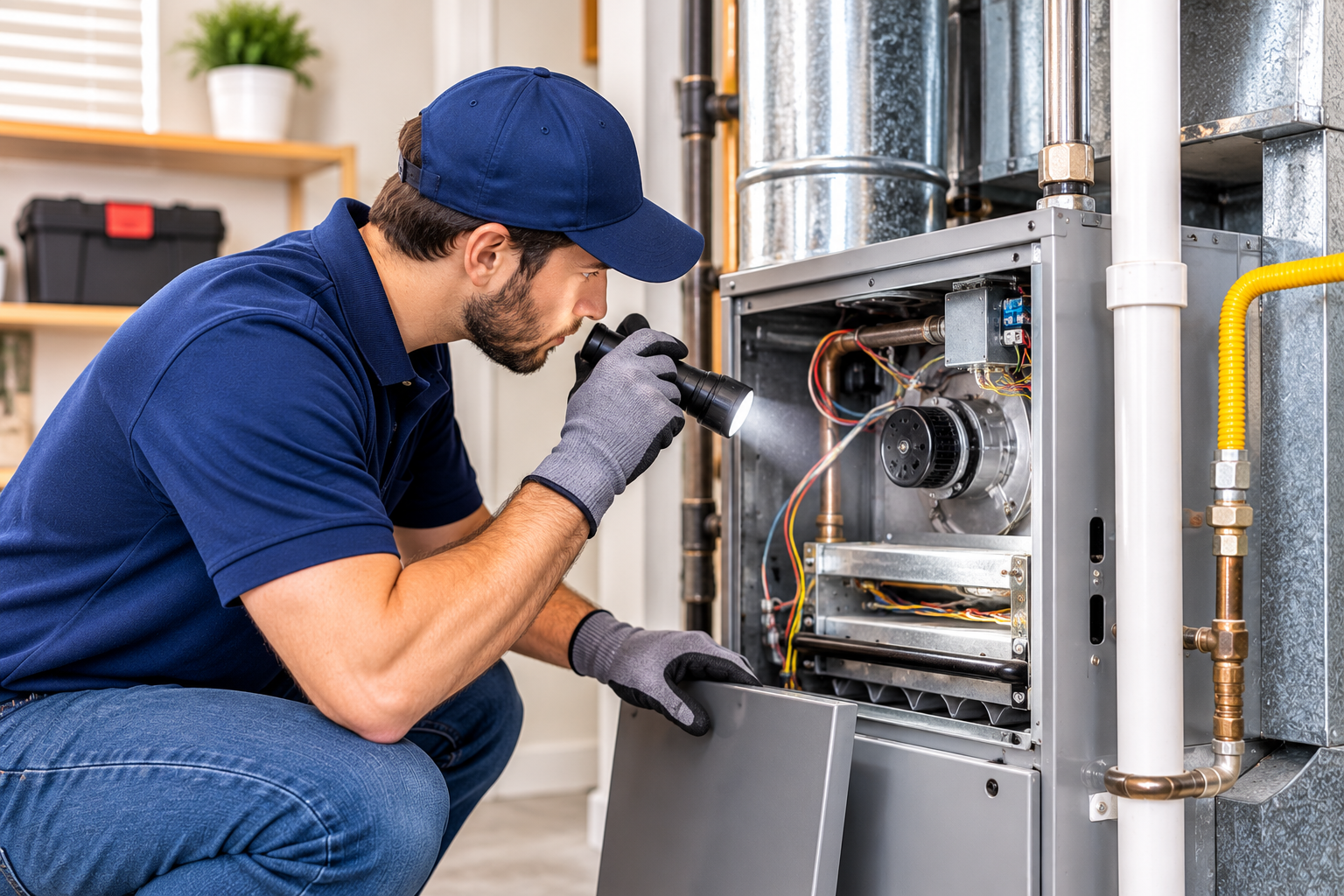
When Should You Call a Professional Furnace Repair Technician?
Basic troubleshooting can resolve certain heating issues, but not every furnace problem should be handled without professional assistance. Internal electrical faults, gas supply problems, ignition failures, damaged heat exchangers and repeated safety shutdowns require appropriate equipment and technical knowledge. Continuing to operate a malfunctioning system may create additional problems or compromise household safety.
Consider arranging professional assistance when you notice:
Repeated furnace shutdowns that continue after basic checks.
Cold air coming from vents despite correct thermostat settings.
Unusual banging, grinding or persistent buzzing sounds.
Ignition problems or recurring diagnostic error codes.
Water leaks or visible damage around the equipment.
If you notice a carbon monoxide alarm, leave the property immediately and contact emergency services. Never ignore a safety warning or attempt to repair combustion-related components yourself.
For persistent heating problems, our furnace repair services can help identify the underlying issue and restore dependable indoor comfort.
Common Furnace Problems and Their Possible Causes
Understanding common furnace symptoms can help you explain the issue when arranging a service appointment. The following table highlights several problems and their potential causes. These are general indicators rather than confirmed diagnoses, as multiple faults can produce similar symptoms.
Furnace Problem | Possible Cause |
|---|---|
Furnace will not turn on | Thermostat, electrical supply or control issue |
Blowing cold air | Thermostat settings, ignition or burner problem |
Weak airflow | Dirty filter, blower or ductwork issue |
Furnace keeps shutting down | Overheating, sensor or ventilation problem |
Unusual banging noises | Ignition or mechanical issue |
Water around the furnace | Clogged condensate drain |
Furnace runs continuously | Thermostat or system performance issue |
A proper inspection helps determine whether the issue involves a simple adjustment, a replaceable component or a more significant equipment fault.
Why Regular Furnace Maintenance Is Important
Preventive maintenance is one of the best ways to keep your heating equipment operating reliably throughout winter. During a professional inspection, a technician can examine important components, check electrical connections, assess airflow, inspect the burner assembly and verify that the system operates according to manufacturer specifications. Identifying developing concerns early may help reduce unexpected breakdowns and unnecessary repair expenses.
We recommend keeping your complete home comfort equipment in good condition. For homeowners using alternative heating systems, our heat pump repair and maintenance services provide support for equipment inspections and operating problems. You can also learn more about our approach, experience and commitment to customer service on our About Us page.
Conclusion: Get Your Furnace Heating Again
A furnace that is not heating does not always indicate a major equipment failure. Checking the thermostat, replacing a dirty filter, inspecting vents and confirming the power supply can sometimes resolve simple problems. However, persistent shutdowns, ignition issues, unusual noises and safety warnings should always be handled by qualified professionals.
We understand how frustrating heating problems can be during Ontario’s cold winter months. Our goal is to help homeowners identify furnace issues and find practical solutions that support reliable indoor comfort. Whether you need troubleshooting, emergency heating assistance or routine maintenance, our team is ready to help. Contact us to arrange professional furnace service and keep your home comfortable throughout the heating season.